Triband Netwok booster

Tri Band Mobile Signal Booster

Tri Band Mobile Signal Booster – Improve Indoor Mobile Network Coverage

If you’ve ever compared signal boosters online, you’ve probably run into three confusing words: single-band, dual-band, and tri-band. It’s not just marketing jargon — the band count decides how many networks and technologies your booster can actually support at once. Get it wrong, and you could end up with a device that boosts your Jio calls perfectly while leaving your Airtel data connection just as weak as before.

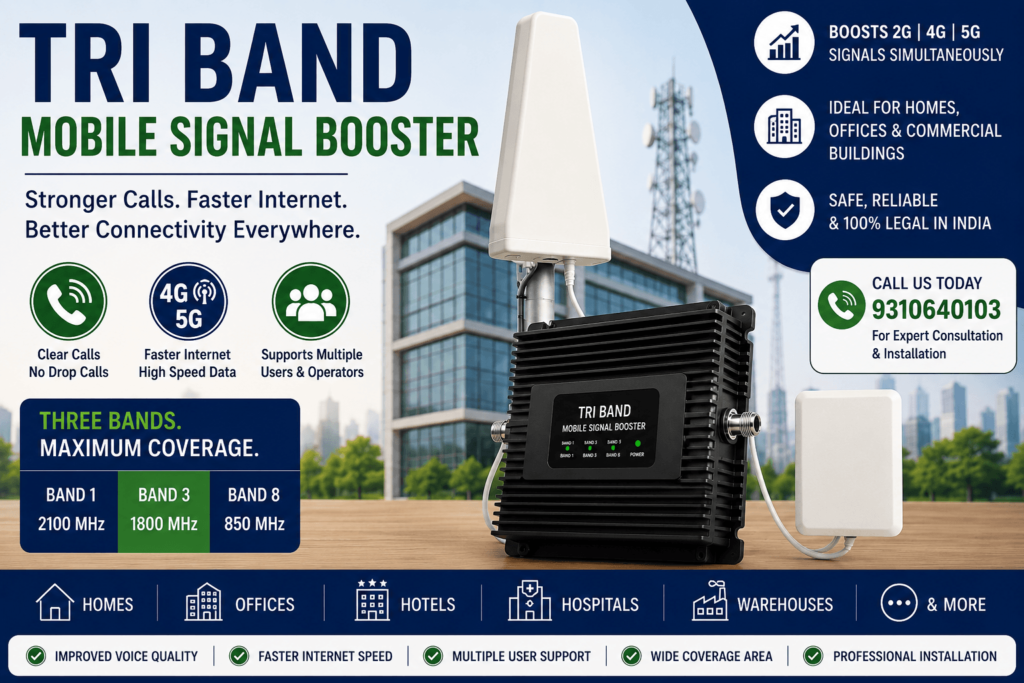
Unlike a single-band or dual-band booster, a tri band mobile signal booster amplifies three different frequency bands simultaneously. This enables better compatibility with multiple telecom operators and supports several mobile technologies at the same time.


What Is a Tri-Band Mobile Signal Booster?

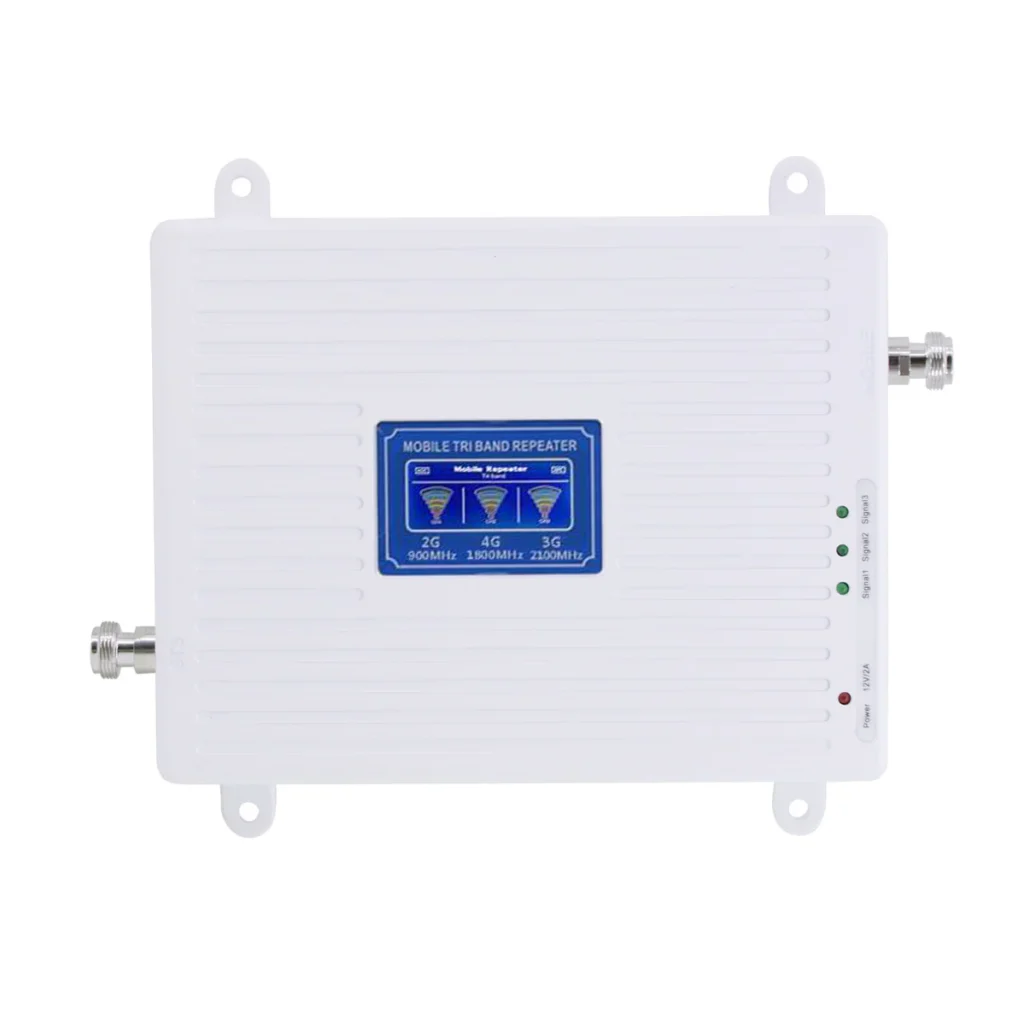
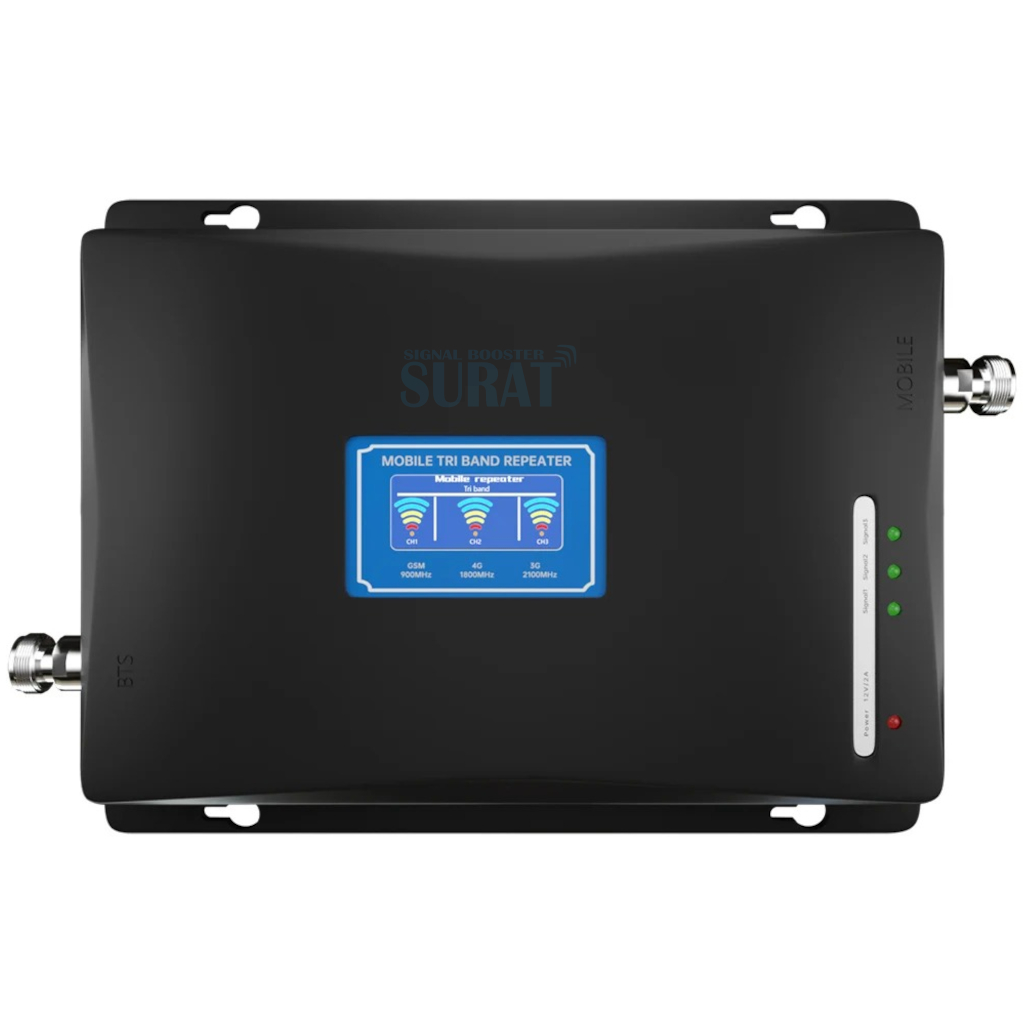
A tri-band mobile signal booster is a signal amplification device built to capture, boost, and rebroadcast three separate mobile network frequency bands at the same time, instead of just one or two. Like every signal booster, it works through three core components — an outdoor antenna, an amplifier unit, and an indoor antenna — but its amplifier is engineered to handle multiple frequency ranges simultaneously without interference.

In practical terms, this means one tri-band device can strengthen your voice calls, SMS, and mobile data across multiple operators and technologies (2G, 3G, and 4G) in a single installation, rather than needing separate boosters for each.

Single-Band vs Dual-Band vs Tri-Band: What's the Real Difference?

TypeBands CoveredBest For
Single-band1 frequency (e.g., only 1800 MHz)Small homes with one clear network problem (e.g., only voice calls dropping)
Dual-band2 frequencies (e.g., 900 + 1800 MHz)Homes or small offices needing both calling and basic data coverage
Tri-band3 frequencies (e.g., 850/900 + 1800 + 2100/2300 MHz)Offices, large homes, warehouses, and buildings with multiple operators or mixed 2G/3G/4G usage

The more bands a booster supports, the more “future-proof” and flexible it is — but it also typically costs more and needs a slightly more capable amplifier and antenna setup. For most Indian households dealing with more than one type of connectivity issue (say, patchy calls and slow 4G), tri-band is usually the sweet spot between performance and price. It is also ideal for business owners where customers walk in and are generally using different carriers. 

Which Frequency Bands Does a Tri-Band Booster Cover in India?

Indian telecom operators don’t all use identical frequencies, which is exactly why tri-band matters here more than in many other countries. Tri Band Boosters can be broadly categorised into 2 categories – Basic & Commercial.

Under Basic boosters there are 3 main popular combination which include-

850-1800-2100 –  This the most common frequency that works for most customers. It is preferred because it covers all the common frequency that are widely used by telecom operators in India. 

900-1800-2100 – This combination is also very common among users mainly because it is used for 2G voice calls and wide-area coverage; this is the band that penetrates walls and travels the farthest.

850-900-1800 – This combination is not very a common choice among the users. This is a very niche product only used by a handful of people 

Under Commercial boosters there are a few of Triband Booster combination which include-

850-1800-2300
900-1800-2300
700-1800-2300
850-900-2300
850-900-2300

triband booster - 850 -1800 - 2100
triband booster 900-1800-2100

A booster covering all three gives you strong calling, reliable SMS delivery, and fast data — across the operators that actually use these bands in your area. If you want a deeper breakdown of the 2300 MHz/Band 40 frequency specifically, we’ve covered that in detail in our other guide.

Where Can a Tri Band Mobile Signal Booster Be Installed?

A professionally installed tri band booster is ideal for :

  • Residential Homes
  • Corporate Offices
  • Apartment Complexes
  • Hotels
  • Hospitals
  • Warehouses
  • Manufacturing Plants
  • Educational Institutions
  • Retail Stores
  • Restaurants
  • Shopping Centres
  • Farmhouses
  • Underground Parking Areas
  • Basements

Common Signs You Need a Tri Band Mobile Signal Booster

You may benefit from a booster if you experience:

  • Frequent call drops
  • Weak signal indoors
  • Slow mobile internet
  • Delayed message delivery
  • Poor signal in basements
  • Weak coverage in offices
  • Signal loss inside concrete buildings
  • Difficulty making calls near windows only
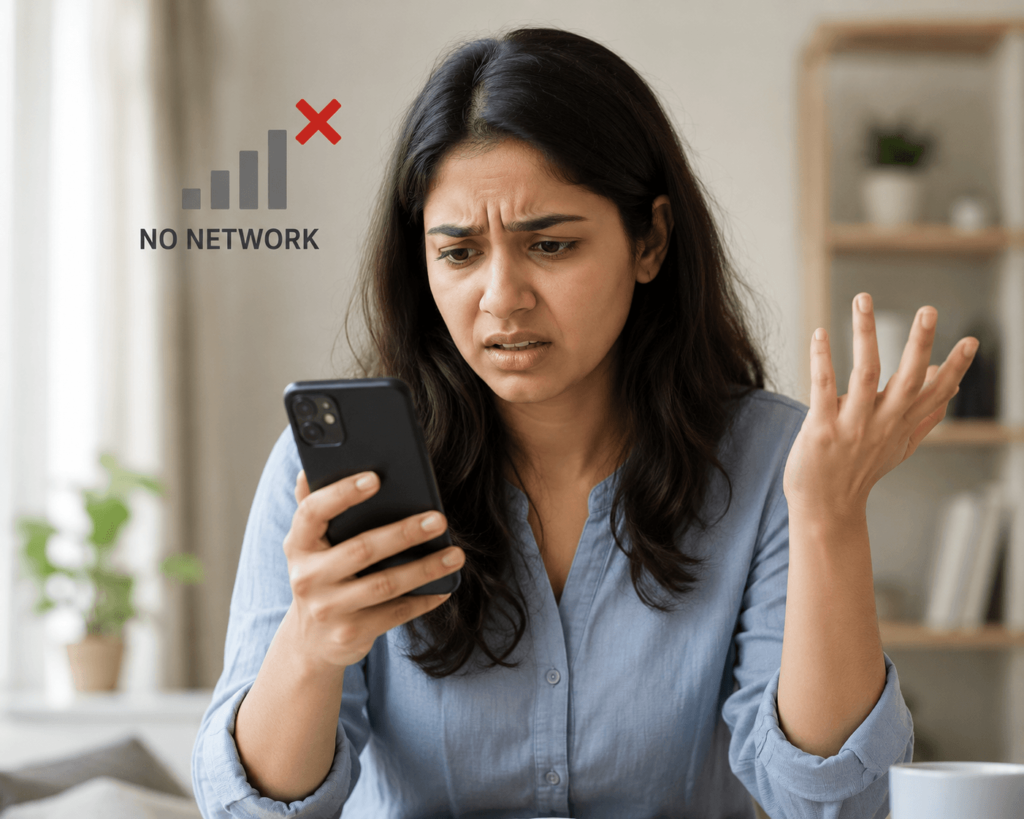
no network
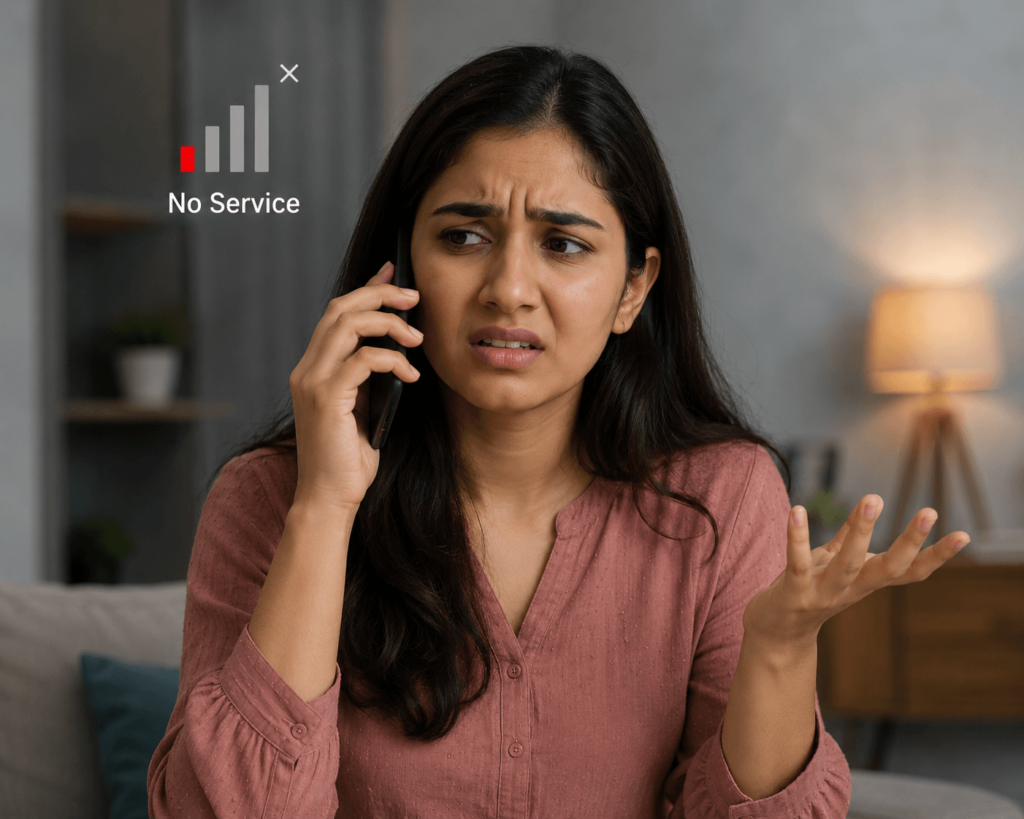
poor signal

Key Features to Look For in a Tri-Band Signal Booster

When comparing tri-band boosters, don’t just look at the band count — these factors matter just as much:

  1. Coverage area (sq. ft.) — make sure the model matches your actual space; an undersized booster will leave dead zones.
  2. Smart AGC (Automatic Gain Control) — protects nearby cell towers from signal overload and keeps your booster compliant.
  3. Dedicated indoor and outdoor antennas — better build quality here directly affects how far the signal travels inside.
  4. Metal enclosure and weatherproofing — especially important for the outdoor unit, which faces sun, rain, and heat year-round.
  5. Universal operator compatibility — confirm the booster works across Jio, Airtel, Vi, and BSNL, not just one network.
Frequently Asked Questions

Is a tri-band booster better than a 5G booster? Tri-band boosters cover 2G/3G/4G frequencies. True 5G in India operates on much higher bands (3300–4200 MHz), which most tri-band boosters don’t cover. If your priority is calling and 4G data, tri-band is the right choice; if you specifically need 5G coverage, check a booster’s spec sheet for that range separately.

Can one tri-band booster support multiple network operators at once? Yes — that’s the main advantage. Because operators like Jio, Airtel, and Vi share overlapping frequency bands, a tri-band booster can serve multiple operators’ users in the same building simultaneously.

Will a tri-band booster work if I change my network provider later? In most cases, yes. Since tri-band boosters cover the shared frequency bands used across major Indian operators, switching providers usually doesn’t require a new booster.

How do I know which bands are weak in my area? You can check your current signal strength in dBm using your phone’s field test mode before choosing a booster. We’ve written a full walkthrough on how to check your mobile signal strength if you want to confirm exactly where your weak spots are.

Why Choose BoostSignal?

BoostSignal specializes in indoor mobile coverage solutions for residential and commercial properties across India.

Our services include:

  • Professional RF Site Surveys
  • Expert Installation
  • Customized Coverage Design
  • Multi-Operator Solutions
  • Commercial & Industrial Projects
  • IBS and DAS Consultation
  • After-Sales Technical Support

Whether you need improved coverage for a small home or a large commercial building, our experienced team can recommend the right solution based on your property’s size and signal conditions.

Final Thoughts

A tri-band mobile signal booster is the most practical choice for anyone dealing with more than one connectivity issue, multiple network operators under one roof, or a larger space to cover. It costs a bit more upfront than single or dual-band options, but for most homes and offices in India, it pays off by solving calling and data problems with a single installation — instead of needing separate fixes down the line.

If you’re not sure which band combination or coverage size is right for your space, get in touch with our team for a free recommendation based on your building size and network usage.