850-1800-2300 Mobile Signal Booster: Improve Indoor Mobile Network Coverage
If you’ve been comparing signal boosters, you’ve probably noticed listings labeled with specific numbers like “850/1800/2300 MHz” instead of just “tri-band.” These numbers aren’t random — they tell you exactly which frequencies the booster amplifies, and in India’s mixed-spectrum environment, that detail matters more than most buyers realize.
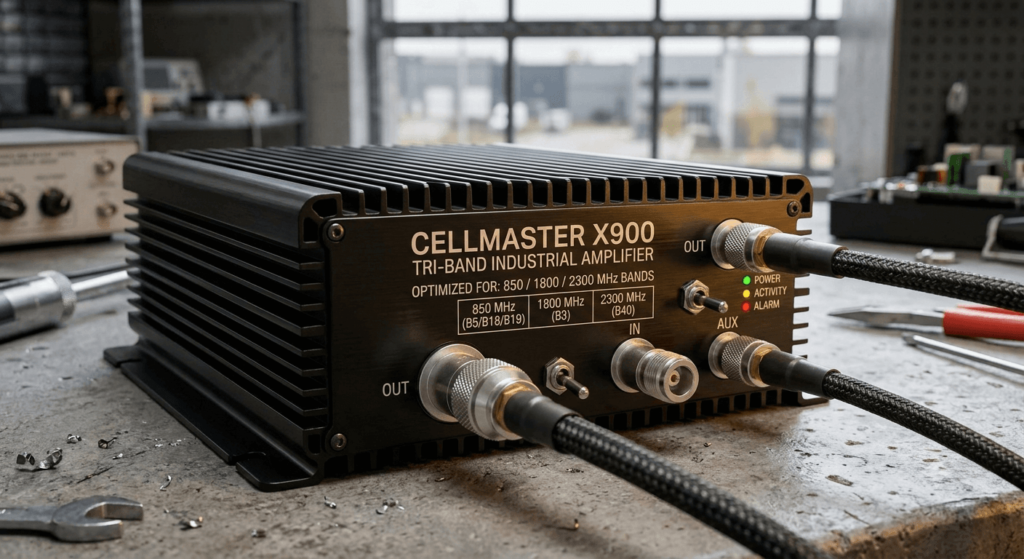
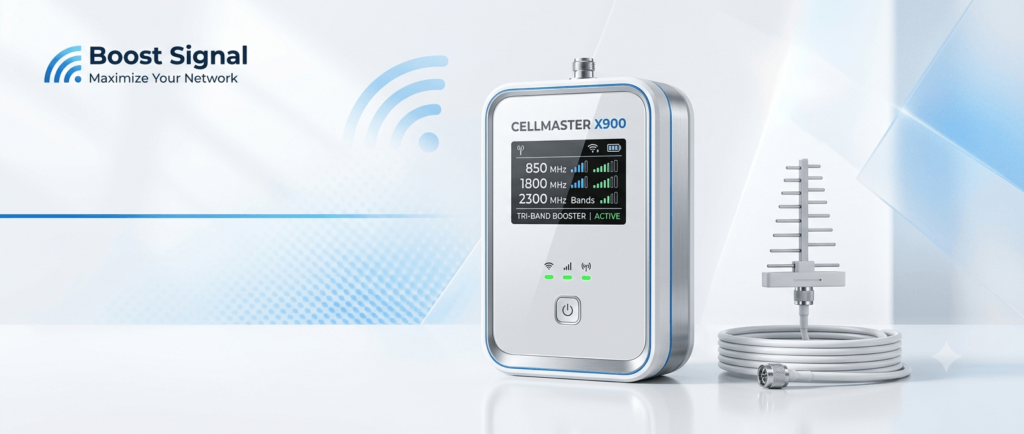
This multi-band mobile signal booster is designed to work across 850 MHz, 1800 MHz, and 2300 MHz frequency bands. These frequency bands are used in mobile communication networks and are commonly associated with different coverage and capacity requirements.
This guide breaks down exactly what an 850-1800-2300 MHz booster covers, which Indian operators actually use these bands, and how to know if this specific combination is the right one for your home or office.
What Does "850-1800-2300 MHz" Actually Mean?
These three numbers refer to the specific radio frequency bands a booster is built to amplify — essentially its technical fingerprint. A booster labeled 850-1800-2300 MHz is a tri-band device engineered around this exact combination, rather than a different tri-band mix like 900-1800-2100 MHz. Both are “tri-band” boosters, but they solve different problems depending on which bands your local network actually uses.
Here’s what each of the three bands does:
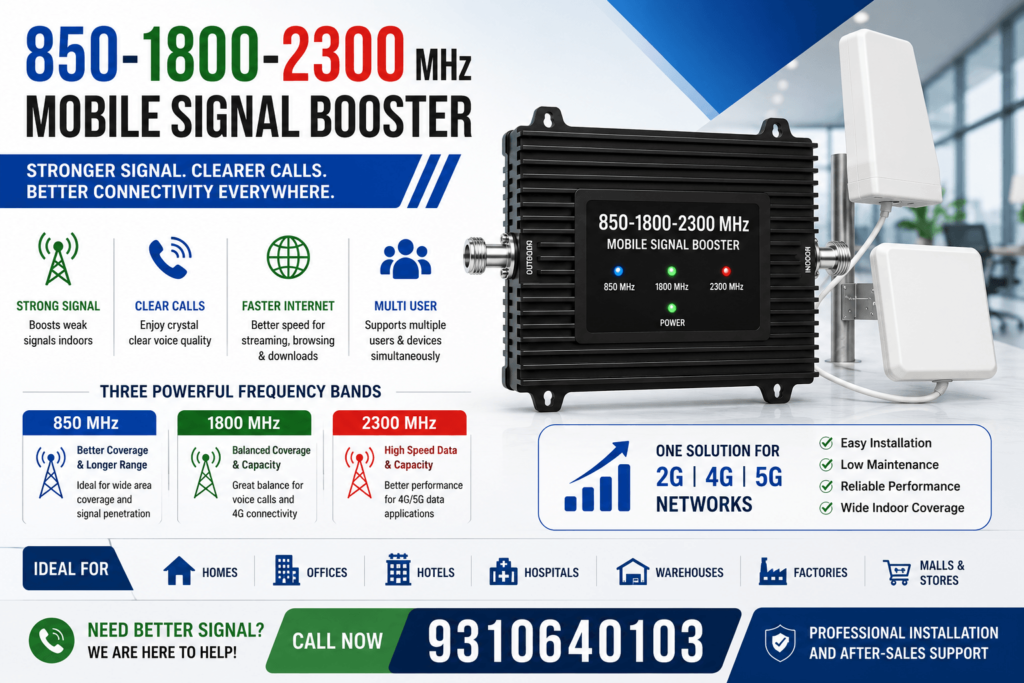
- 850 MHz — a low-frequency band known for long-range coverage and strong wall penetration. It’s typically used for wide-area 2G/3G voice and legacy data coverage, which is why it’s especially valuable in basements, rural areas, and thick-walled buildings.
- 1800 MHz — a mid-frequency band shared between 2G voice calls and 4G LTE data. It’s one of the most heavily used bands across Indian telecom operators, making it essential in almost any booster.
- 2300 MHz (Band 40) — a higher-frequency band used specifically for high-speed 4G TD-LTE data. It carries more data than 850 or 1800 MHz but has a shorter range and weaker penetration, so it typically needs a booster’s help indoors more than the other two.
Together, this combination is designed to fix the two most common complaints at once: dropped or unclear calls (850/1800 MHz) and slow or buffering 4G data (1800/2300 MHz).
850 MHz vs 1800 MHz vs 2300 MHz
| Frequency | General Characteristics | Typical Advantage |
|---|---|---|
| 850 MHz | Lower frequency | Coverage and signal reach |
| 1800 MHz | Mid-range frequency | Balance of coverage and capacity |
| 2300 MHz | Higher frequency | Mobile data and network capacity |
It is important to understand that the best frequency depends on the mobile network available at your location.
This is why professional signal testing is recommended before selecting a booster for a commercial or large-scale installation.
Which Networks in India Use 850, 1800, and 2300 MHz?
This band combination isn’t arbitrary — it maps closely to how Indian operators actually allocate spectrum:
- Jio — uses 850 MHz for wide-area LTE coverage and 1800 MHz in many circles, alongside 2300 MHz for high-capacity 4G data in dense areas.
- Airtel — uses 1800 MHz extensively for both 2G and 4G, and holds 2300 MHz (Band 40) spectrum in several major cities for added 4G capacity.
- Vi (Vodafone Idea) — also operates across 1800 MHz and holds 2300 MHz spectrum in select circles.
Because these three operators collectively cover most of the country using this band mix, an 850-1800-2300 MHz booster tends to be one of the more broadly useful tri-band configurations available in India — though exact band usage can vary by city and circle, so it’s worth checking coverage maps or asking your installer to confirm for your specific location.
Benefits of an 850-1800-2300 Mobile Signal Booster
Supports Three Mobile Frequency Bands
The booster is designed to support three different frequency bands in a single system, offering greater flexibility compared with a single-band booster.
Helps Improve Indoor Mobile Coverage
Weak signals inside buildings can be caused by thick concrete walls, metal structures, distance from the tower, and building design. A properly designed booster system can help improve indoor coverage.
More Reliable Voice Calls
Better signal conditions can help reduce problems associated with weak mobile signals, including unstable calls and poor voice quality.
Better Mobile Data Experience
When weak signal strength is the main cause of poor mobile data performance, improving signal quality can help provide a more stable connection.
Suitable for Multiple Applications
The system can be used for residential, commercial, and industrial applications depending on the booster configuration and coverage requirements.
What to Look for in an 850-1800-2300 MHz Booster
Beyond confirming the band combination itself, check for:
- Coverage area rating (sq. ft.) matched to your actual space
- Smart AGC (Automatic Gain Control) to prevent signal overload and interference with carrier towers
- Confirmed multi-operator support for Jio, Airtel, and Vi specifically, not just a generic “all networks” claim
- Weatherproof outdoor unit built to handle India’s heat and monsoon conditions
- Warranty and installation support, especially for larger installations
Our own Seguro Mobile Network Booster is built around this exact tri-band configuration, with Smart AGC and coverage up to 10,000 sq. ft., making it suited for both homes and offices dealing with weak calling and slow 4G data at the same time.
Frequently Asked Questions
Will an 850-1800-2300 MHz booster work with a 5G phone? It will still boost your voice calls and 4G data on a 5G phone, since most 5G devices fall back to 4G/LTE indoors where coverage is weak. It won’t boost true 5G signal, which uses much higher frequency bands (3300–4200 MHz in India).
Is this the same as a standard tri-band booster? It’s a specific type of tri-band booster. “Tri-band” only tells you it covers three bands — 850-1800-2300 MHz tells you exactly which three, which matters because different tri-band boosters can cover different combinations.
Can this booster support Jio, Airtel, and Vi at the same time? Yes. Since all three operators use overlapping portions of the 850, 1800, and 2300 MHz spectrum in most circles, one booster can serve users on different networks in the same building simultaneously.
Do I need a quad band booster instead? Only if you also need to cover a fourth band, such as 2100 MHz for 3G. For most homes and offices focused on calling plus 4G data, the three-band 850-1800-2300 MHz combination is usually enough. You can compare the two in more detail in our quad band booster guide.
Final Thoughts
An 850-1800-2300 MHz mobile signal booster is one of the most practical tri-band combinations for Indian users, since it lines up closely with how Jio, Airtel, and Vi actually allocate spectrum for calling and high-speed 4G data. If your main issues are dropped calls and slow data indoors, this specific band combination is likely the right match — but it’s always worth confirming your local network’s dominant bands before choosing.
Not sure if this is the right combination for your space? Get in touch with our team for a free recommendation based on your building size and the networks you use.