Quad Band Mobile Signal Booster: Full Coverage Across Every Network
Are you tired of dropped calls, weak mobile signals, or slow internet inside your home or office? A Quad Band Mobile Signal Booster could be the solution you are looking for.
A quad band signal booster is designed to improve mobile network coverage by amplifying signals across four different frequency bands. It is a practical solution for homes, offices, hotels, hospitals, warehouses, factories, and other buildings where mobile signals are weak or unreliable.
A weak signal rarely comes from just one frequency going bad — it’s usually a mix of poor calling on one band and slow data on another, sometimes across two or three different operators in the same building. That’s the exact problem a quad band mobile signal booster is built to solve: instead of picking and choosing which frequency to fix, it strengthens four bands at once, covering nearly every common calling and data scenario in a single device.
This guide explains what a quad band booster actually is, which four frequencies it typically covers in India, how it compares to dual and tri-band options, and who really needs one.
What is a Quad Band Mobile Signal Booster?
A Quad Band Mobile Signal Booster is a device that helps improve weak mobile signals inside a building.
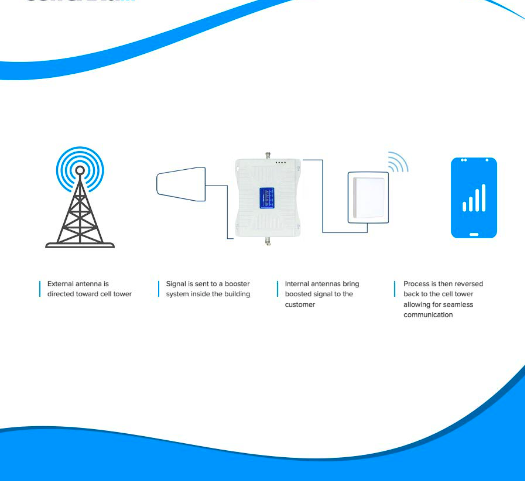
The system captures the available mobile signal from outside, strengthens it, and distributes the improved signal indoors. This can help you enjoy more reliable mobile connectivity for calls and mobile data.
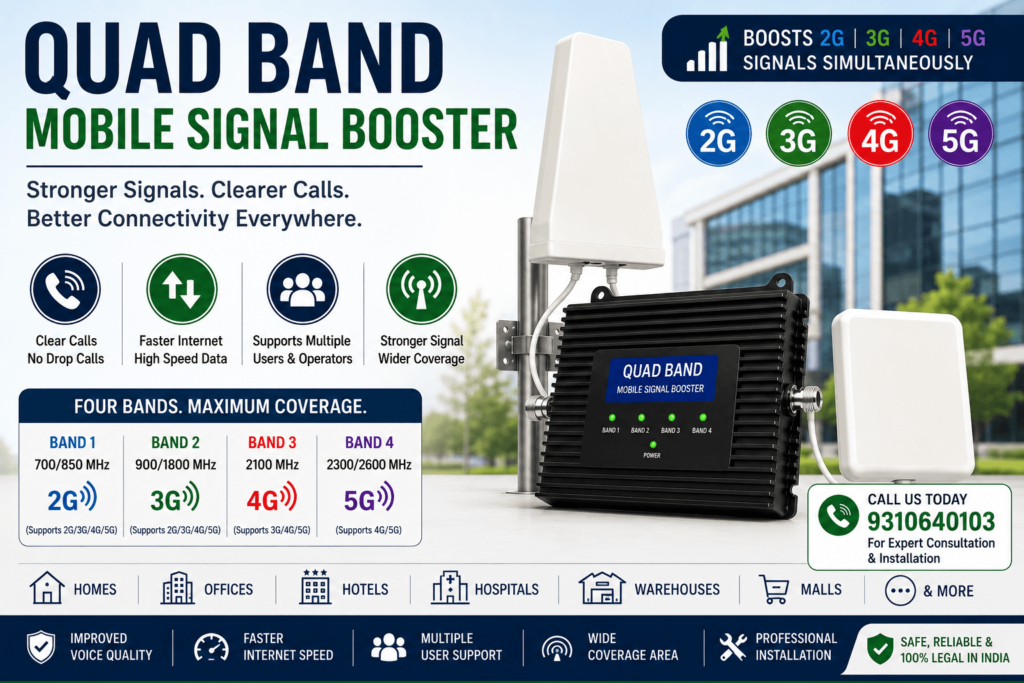
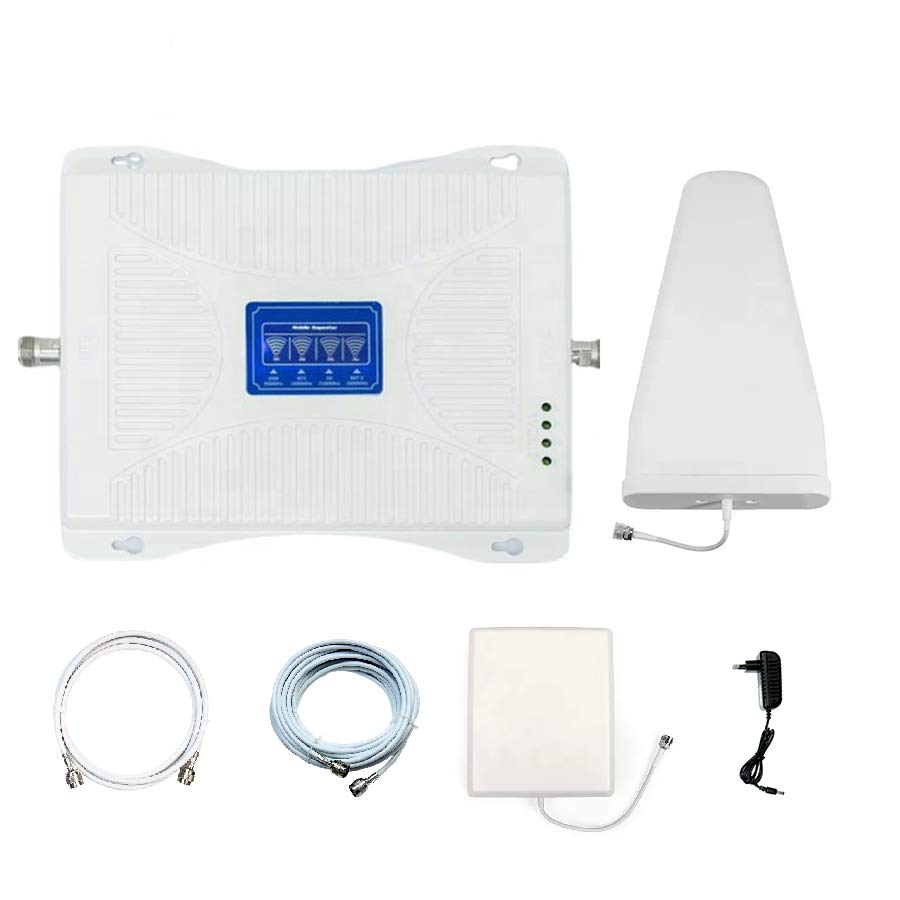
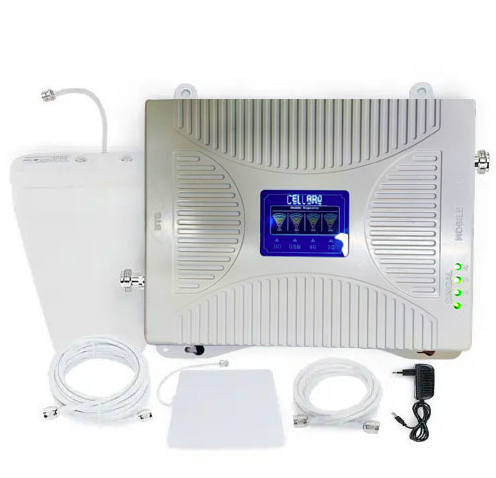
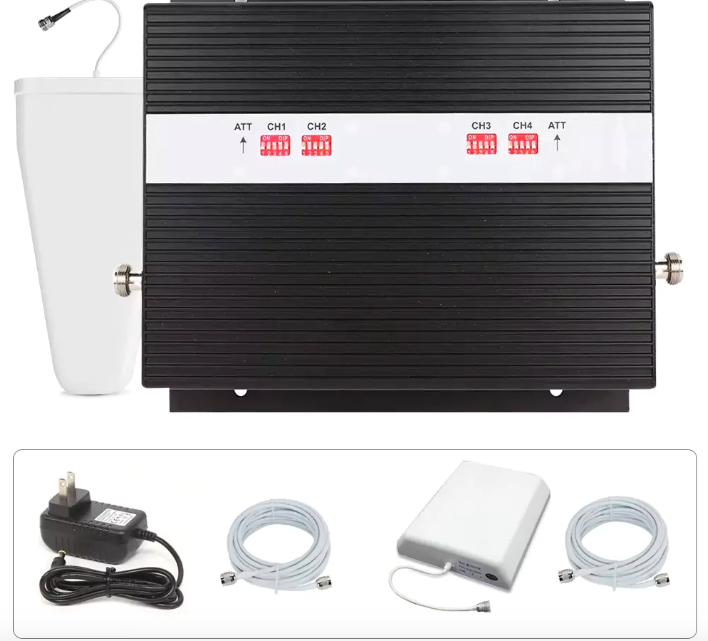
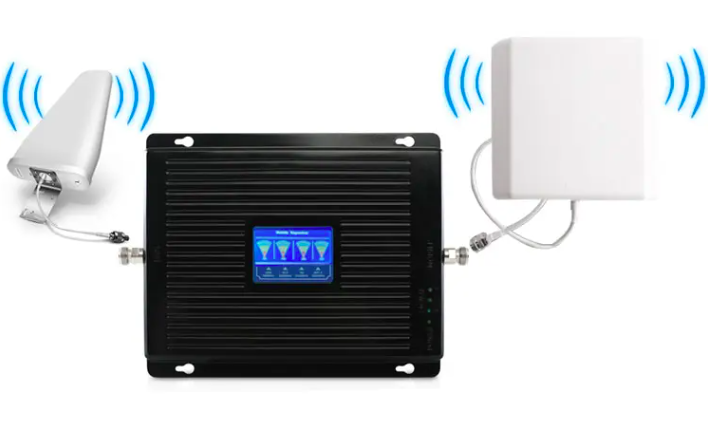
A typical quad band signal booster system includes:
- Outdoor high-gain antenna
- Quad band signal booster
- Indoor coverage antenna
- Low-loss coaxial cable
- RF connectors and mounting accessories
When the system is properly designed and installed, these components work together to improve mobile signal coverage throughout the required area.
Quad Band vs Single, Dual and Tri Band Signal Boosters
Not sure which type of booster you need? Here’s a simple comparison:
| Feature | Single Band | Dual Band | Tri Band | Quad Band |
|---|---|---|---|---|
| Frequency Support | 1 Band | 2 Bands | 3 Bands | 4 Bands |
| Network Flexibility | Limited | Good | Better | Excellent |
| Multiple User Support | Basic | Good | Very Good | Excellent |
| Suitable for Commercial Buildings | Limited | Moderate | Good | Excellent |
A Quad Band Mobile Signal Booster is a good option when you need to support multiple frequency bands and want greater flexibility for indoor mobile coverage.
However, the right booster depends on your location, available outdoor signal, network requirements, and building size. If you’ve already read about tri-band boosters, think of quad band as the next step up — same underlying idea, but built for spaces where more people, more devices, and more operators are competing for signal at the same time.
Which Four Frequency Bands Does a Quad Band Booster Cover?
We have curated a list of all the combinations of Quad Band Mobile Signal Booster that are readily available with us. All these combinations are always available in stock.
- 850-1800-2100-2300
- 850-900-1800-2300
- 900-1800-2100-2300
- 850-900-2100-2300
Who Actually Needs a Quad Band Booster?
Quad band isn’t necessary for every home, but it’s the right call in specific situations:
Choose quad band if:
- You’re covering a large office, retail space, or warehouse with many simultaneous users
- Your building has employees or residents on different network operators
- You need consistently strong calls and fast 4G data, not just one or the other
- You’ve already tried a dual or tri-band booster and still have dead zones
A tri-band or dual-band booster may be enough if:
- You’re covering a single home or apartment with one primary user
- Your issue is limited to just calling or just data, not both
- Budget is the deciding factor and your space is small
As a rule of thumb: the larger and more shared the space, the more bands you should look for in a booster.
What to Check Before Buying a Quad Band Booster?
Band count is only part of the picture. Before choosing a model, verify:
- Coverage area rating (sq. ft.) — quad band doesn’t compensate for an undersized amplifier; match the model to your actual floor area.
- Multi-operator compatibility — confirm the listing explicitly states support for Jio, Airtel, Vi, and BSNL, not just “all networks” as a generic claim.
- Smart AGC (Automatic Gain Control) — this prevents the booster from over-amplifying and interfering with the carrier’s own tower signal, which is both a performance and compliance issue.
- Build quality of the outdoor unit — it needs to withstand sun, rain, and heat without degrading over years of use.
- Warranty and installation support — commercial-grade quad band units are a bigger investment, so proper support matters more here than on smaller boosters.
Our own Seguro Mobile Network Booster is built to this same standard — multi-band support, Smart AGC, and coverage up to 10,000 sq. ft. — making it suitable for offices and larger properties that need this level of coverage.
Frequently Asked Questions
Is quad band better than tri-band for a home? For most single-family homes, tri-band is usually sufficient. Quad band becomes worthwhile when the space is larger, shared by multiple operators, or experiencing both voice and data issues at once — which is more common in offices than in typical homes.
Does quad band mean it supports 5G? Not necessarily. Quad band typically refers to 2G/3G/4G frequency combinations. True 5G in India uses much higher frequency bands (3300–4200 MHz), so check a product’s spec sheet separately if 5G coverage is your priority.
Can a quad band booster serve multiple operators in the same office? Yes — this is one of the main reasons businesses choose quad band. Because the covered frequencies overlap with the bands used by Jio, Airtel, Vi, and BSNL, one booster can improve signal for staff on different networks simultaneously.
How do I know if I need quad band instead of tri-band? Start by checking your current signal strength across the space. Our guide on checking mobile signal strength walks through how to test this on your phone, which helps confirm whether your issue is limited to one or two bands or spread across more.
Final Thoughts
A quad band mobile signal booster is built for spaces where a simpler booster falls short — larger offices, commercial buildings, and homes with heavy, multi-operator usage. It costs more than a dual or tri-band unit, but for the right space, it solves calling and data problems across every major network in one installation instead of leaving gaps that need a second fix later.
If you’re unsure whether your space needs quad band or a simpler tri-band setup, reach out to our team for a free recommendation based on your building size and network usage.